
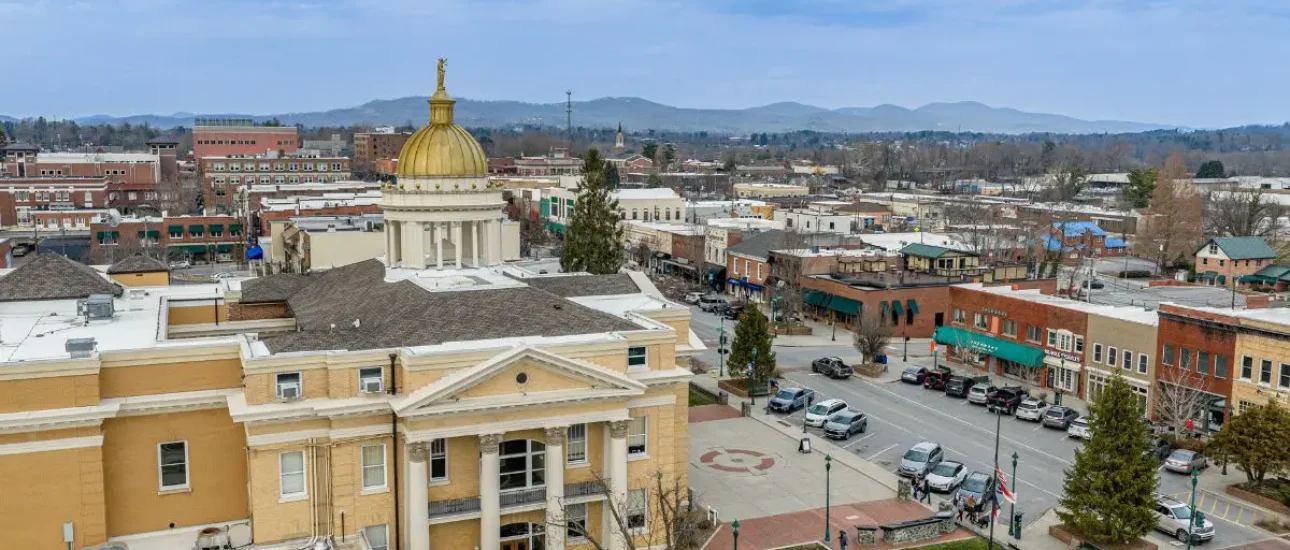
This article is part of a broader look at the best places to live in Western North Carolina. In that guide, Asheville represents one of three distinct paths—defined by energy, variety, and access. This piece focuses on the lifestyle options available when living in Asheville NC, and the tradeoffs that often come with living in one of the region’s most active and dynamic markets.
What draws people to Asheville, NC
Asheville has long been the cultural and economic center of Western North Carolina. For many, it represents one of the most complete versions of mountain living—combining natural beauty with a level of activity, infrastructure, and convenience that is unique in the region.
Restaurants, healthcare systems, retail, arts, and entertainment are all concentrated here. It’s a place where you can have dinner downtown, attend a performance, and spend the next morning in the mountains.
That combination is rare—and it’s one of the reasons Asheville continues to attract attention.
But Asheville’s growth and popularity have also changed how the city feels over time.
For some people, that level of activity and growth is part of the appeal. For others, it creates a level of friction that feels increasingly at odds with mountain living.
That tension is central to understanding Asheville—not just whether it is desirable, but what kind of lifestyle it ultimately supports.
The appeal of variety
What sets Asheville apart is the diversity of ways to live within one regional market.
In Asheville you can:
- Live near the center of activity or further out in quieter neighborhoods
- Choose between established communities or newer developments
- Access a wide range of services without leaving the area
For those coming from larger metropolitan regions, Asheville often feels like a scaled-down but still complete environment.
What has changed
Growth has brought tradeoffs: traffic has increased, housing costs have climbed, and rapid development has altered parts of the city’s original character.
None of this is unusual for a desirable market—but it does affect how daily life feels.
Part of what makes Asheville distinctive is that people respond to those tradeoffs differently—and often choose very different types of living environments as a result.
Different ways of living in Asheville, NC
One of the defining aspects of Asheville is that it offers multiple ways to experience mountain living—not just different neighborhoods, but entirely different lifestyle environments.
Master-planned and amenity-driven communities
These communities allow residents to engage with Asheville while living in a more curated setting. Examples include:
- The Cliffs at Walnut Cove
- The Ramble Biltmore Forest
- Connestee Falls
These communities are designed with:
- Shared amenities, such as golf courses, clubhouses, trails, wellness centers
- Architectural and land-use guidelines
- A more structured, managed environment
Why they appeal:
- Predictability and consistency
- Built-in amenities
- Opportunities for social connection
Traditional Neighborhood Developments (TNDs)
A different model can be found in places like the Biltmore Park and the Village of Cheshire in nearby Black Mountain.
These communities are designed around:
- Walkable streets
- Mixed-use spaces (homes, small businesses, gathering areas)
- A layout that encourages interaction rather than separation
Key characteristics:
- Homes oriented toward streets and public space
- Central gathering areas, such as parks, cafés, and small shops
- A design that prioritizes everyday interaction
Why they appeal:
- A stronger sense of neighborhood identity
- The ability to walk to daily needs
- A more organic, town-like feel—by design
TNDs offer structure, but of a different kind—less about amenities, more about how people naturally connect.
The tradeoffs
Each of these environments offers a different version of Asheville:
- The city itself → energy and variety
- Master-planned communities → structure and convenience
- TNDs → walkability and intentional neighborhood design
None is inherently better. Each simply shapes daily life in a different way.
Who Asheville works best for
Asheville tends to be the right fit for people who:
- Want activity and options built into daily life
- Value access to healthcare, dining, and culture
- Are comfortable with a faster pace within a mountain setting
The key consideration
For many people, the real decision is not whether Asheville has tradeoffs—it clearly does.
The deeper consideration is whether the energy, opportunity, and vibrancy of Asheville outweigh those tradeoffs in daily life.
For those who answer yes, the next consideration becomes how they want to experience Asheville itself:
- In the center of activity and momentum
- Within a more structured, amenity-oriented community
- Or through a walkable, intentionally designed neighborhood environment
That distinction often shapes long-term satisfaction more than the city alone.
Asheville is often the right choice for people who want mountain living without stepping away from activity, culture, and momentum.
The question is whether its version of mountain life aligns with the pace and environment you want long term.
If you want a fuller picture of life in the Blue Ridge Mountains, you can start with the full guide here:
Best Places to Live in Western North Carolina
You can also explore the other paths in this series, each taking a closer look at a different way of living in the region.